

South America
Welcome Kit
Peru
Nazca
Famous for its giant geoglyphs etched into the desert floor, Nazca is one of Peru’s most iconic and enigmatic destinations. This small city on the southern coast is a gateway to a rich pre-Columbian legacy, desert adventures, and archaeological wonders that continue to intrigue travelers and researchers alike.
Highlights
Nazca is a destination filled with mystery, history, and ancient engineering. The Nazca Lines, enormous and enigmatic geoglyphs etched into the desert, are best appreciated from the air and continue to puzzle researchers. The Cantalloc Aqueducts showcase the ingenuity of the Nazca civilization, with underground water channels that are still functional today. At the Chauchilla Cemetery, you can explore an archaeological site where pre-Inca mummies and burial remains are remarkably well-preserved. To deepen your understanding of the region, the Antonini Museum offers insightful exhibits about the Nazca culture and ongoing excavation work.
General Facts
Nazca is a small desert town in southern Peru, located in the Ica region. It is world-famous for the Nazca Lines—giant geoglyphs etched into the desert floor—and for its rich archaeological heritage.
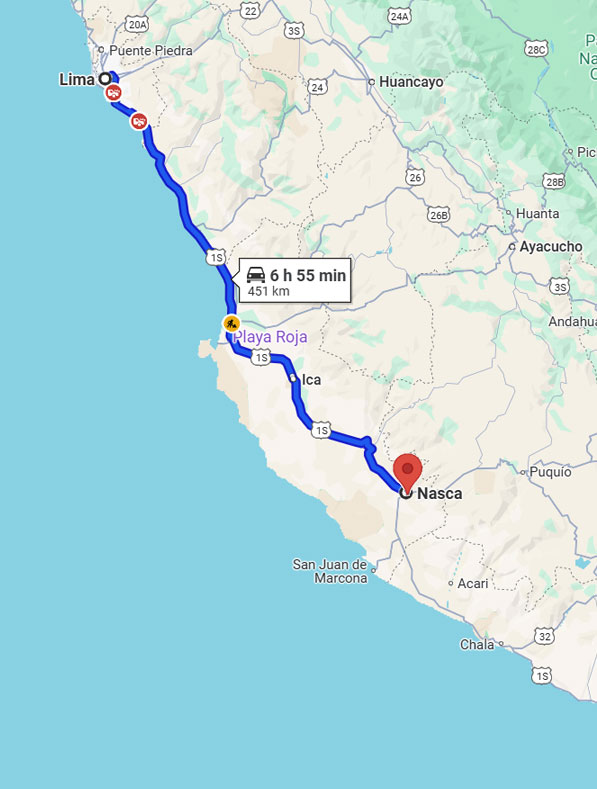
Situated about 450 km south of Lima (approximately 7 hours by road), Nazca is surrounded by arid landscapes, ancient aqueducts, and pre-Inca burial grounds. The area showcases the ingenuity of the Nazca civilization, which developed advanced irrigation systems and left behind cultural wonders that continue to inspire fascination today.
Map Location
Documentation
For a foreigner traveling to Peru, the most common required documentation includes:
Passport: it must be valid for at least 6 months from the date of entry to Peru.
Visa: for tourists from many countries, a visa is not required if the stay is less than 90 days. However, some countries may need a visa to enter, depending on the purpose of the trip and the visitor’s nationality.
Travel Insurance: although not mandatory, it is highly recommended to have travel insurance that covers medical emergencies and other unforeseen situations during your stay in Peru.
Best Time to Go
The best time to visit Nazca is from April to November, when the weather is clear, dry, and mild—ideal for scenic flights and archaeological tours.
June to August brings the coolest temperatures, making it comfortable for sightseeing in the desert heat.
Tip: Flights over the Nazca Lines are generally smoother in the early morning when wind conditions are calm and visibility is at its best.
Clothing
Essential items:
Sunscreen, sunglasses, and a hat – Intense desert sun year-round
Reusable water bottle – To stay hydrated in the dry climate
Motion sickness meds – Useful for those planning a flight over the lines
Recommended clothing:
Light clothing for daytime
Sweater or light jacket for early morning flights
Comfortable shoes for archaeological sites
Tip: Dress in layers and stay sun-protected. The desert can feel mild but the UV exposure is high.
Healthcare
- Sun protection and hydration are essential.
- Bring personal medications, especially for longer or remote visits.
Packing
Peru flights allow, as their restrictions are limited to 50 pounds (23 kg) per person.
Currency
As in the rest of Peru, it is used the nuevo sol (PEN). It has been the official currency since 1991, when it replaced the inti due to inflation. Banknotes and coins of various denominations are used, with the most common being 1, 5, 10, 20, 50, 100 and 200 soles, as well as coins of 1, 2, 5, 10, 20 and 50 cents.
Electricity
Peru uses 220V voltage and 60Hz frequency. The most common plug types are Type A (flat two-pin) and Type C (round two-pin). Similar to those used in Europe and North America with an adapter.
Local Taxes
A 18% VAT (IGV) may apply to services and accommodations
Tourists may be exempt from VAT in hotels if presenting a valid passport and immigration card (TAM)
Foodie
Nazca’s cuisine blends Andean and coastal influences, offering hearty dishes and traditional flavors rooted in pre-Hispanic techniques and rural heritage. These are some typical local specialties:
Chicharrón de chancho
Crispy fried pork served with sweet potatoes and corn—a classic breakfast or lunch dish in the region.
Pachamanca
A traditional Andean meal cooked underground with hot stones. Includes meats, potatoes, corn, and herbs, often shared during celebrations.
Nazca coffee
Smooth and slightly fruity, grown in nearby valleys—perfect for ending a meal or enjoying in the afternoon.
Pisco sour
Peru’s national cocktail, made with pisco, lime, and egg white—widely served in local restaurants and bars.
Foodie Advice >>
Get suggestions from foodies around South America. Click title to read more!
Activities
Scenic flight over the Nazca Lines
Admire the massive geoglyphs from above and appreciate their scale and mystery—an unforgettable experience.
Explore the Cantalloc Aqueducts
Walk along ancient underground water channels that still function today, showcasing the engineering brilliance of the Nazca civilization.
Visit the Chauchilla Cemetery
See remarkably preserved pre-Inca mummies and learn about ancient burial practices in a desert setting.
Tour the Antonini Museum
Gain insight into the Nazca culture through archaeological artifacts and interactive exhibits.
Shop for local handicrafts and textiles
Browse handmade souvenirs and support local artisans at the town’s markets.
Enjoy a pisco tasting or traditional lunch
Savor regional dishes and Peru’s iconic cocktail in a relaxed local setting.